
Indian markets on Dalal Street rallied sharply as easing tensions in the US-Iran conflict and stable oil prices boosted sentiment. Track Nifty 50 and BSE Sensex performance and key global triggers.

The start of the West Asia conflict has led to a sharp increase in crude-linked raw material prices, pushing up the price of helmets across the country.

Most members of the Reserve Bank of India's Monetary Policy Committee (MPC) expressed concerns about inflation becoming generalised and highlighted uncertainties surrounding both inflation and growth prospects due to the West Asia conflict, according to the recently released minutes.

Indian stock markets are set to be influenced by developments in US-Iran negotiations, crude oil prices, and foreign investor activity in the upcoming holiday-shortened week, according to market analysts.
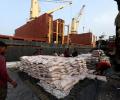
The Federation of Indian Export Organisations (FIEO) has appealed to the Reserve Bank of India (RBI) for liquidity support to Indian exporters, citing a significant increase in freight costs and extended payment cycles due to the ongoing West Asia conflict.

A vessel carrying 20,000 metric tonnes of Liquefied Petroleum Gas (LPG) arrived at Deendayal Port Authority in Kandla, Gujarat, after crossing the Strait of Hormuz amid the West Asia crisis.

Prime Minister Narendra Modi will chair a meeting with senior ministers to review the petroleum, power, and fertiliser sectors in light of the evolving situation in West Asia, focusing on ensuring uninterrupted supply and stable logistics.

The BSE Sensex and the Nifty 50 declined around 4.5 per cent each since the start of the West Asia conflict.

Petrol and diesel prices in India have been increased by Rs 3 per litre each, marking the first rate hike in over four years. This decision follows a period of stable prices during recent state elections, despite rising global crude oil prices and significant losses for fuel retailers.

Titan will continue investments, even as it notes it is too early to assess how customer sentiment and store footfalls will be impacted by the Prime Minister's appeal to reduce gold consumption and the recent hike in import duty.
Prime Minister Narendra Modi will chair a meeting with senior ministers to assess the petroleum, power, and fertiliser sectors in light of the ongoing situation in West Asia, focusing on ensuring uninterrupted supply and stable logistics.

Dr Reddy's Laboratories reported a 68.7 per cent year-on-year decline in consolidated net profit to Rs 443.5 crore in Q1 FY27, primarily due to the end of its lenalidomide sales agreement, a Rs 240-crore provision for semaglutide API inventory quality issues, and elevated freight costs.

The Indian government has waived customs duty on critical petrochemical products until June 30 to ensure supply stability and provide relief to consumers amid disruptions caused by the crisis in West Asia.

Prime Minister Narendra Modi has strongly refuted a media report suggesting the government is considering levying a tax, cess, or surcharge on foreign travel, calling the news "totally false".

Indian benchmark indices, Sensex and Nifty, experienced declines in early trade due to a significant surge in crude oil prices, exacerbated by escalating tensions in the West Asia. Track how Sensex, Nifty fared on July 23.

Indian stock markets are poised for volatility this week, driven primarily by the outcomes of five state assembly elections, ongoing high crude oil prices amid West Asia tensions, and the release of Q4 corporate earnings, according to market analysts.

The World Bank has increased India's economic growth projection for FY27 to 6.6 per cent, citing resilient domestic demand, while simultaneously cutting its global economic growth outlook due to the conflict in West Asia.

Iranian Foreign Minister Abbas Araghchi is in India for a BRICS foreign ministers' meeting, where discussions will focus on the escalating crisis in West Asia and its impact on global energy supply chains.
Air India, IndiGo, and Air India Express are temporarily reducing their domestic flights due to surging jet fuel prices and lower travel demand. The airlines are cutting flights by 10 to 22 per cent in the coming months.

Fast-moving consumer goods (FMCG) companies are closely monitoring crude oil prices and considering low single-digit price increases, while consumer durables firms have already begun passing on significant price hikes to consumers due to rising input costs exacerbated by the West Asia conflict.

India has welcomed the ceasefire between the US and Iran, advocating for de-escalation, dialogue, and diplomacy to secure lasting peace in West Asia.

External Affairs Minister S Jaishankar has emphasised India's commitment to safe maritime transit and condemned attacks on merchant shipping amidst the ongoing West Asia conflict and global energy market disruptions.

The threat has raised concerns about possible asymmetric attacks outside the region. Iran has also stepped up attacks on energy infrastructure in Gulf countries.

Uncertainty stemming from the US-Iran conflict has significantly impacted India's mutual fund industry, leading to a sharp decline in new fund offers (NFOs) in March, despite numerous regulatory approvals. This geopolitical tension, coupled with existing market strain and distributor hesitation, has dampened investor sentiment and affected overall inflows.

India's sugar consumption is projected to fall by nearly 400,000 tonnes in the 2025-26 season, primarily due to the ongoing liquefied petroleum gas (LPG) shortage exacerbated by the West Asia conflict and unseasonably cool weather.

Indian benchmark indices Sensex and Nifty climbed in early trade, driven by buying in blue-chip stocks like Reliance Industries and ICICI Bank, alongside a notable cooling in crude oil prices.
BJP leader Mithun Chakraborty has criticised the West Bengal government over high fuel taxes and alleged security lapses, particularly concerning women's safety and border control.

Opposition parties are demanding a full Parliament discussion on the West Asia conflict, criticising the government's silence and calling for a contingency plan to protect India's energy security and citizens.

Seven Indian-flagged vessels, carrying 148 seafarers, are currently in the Persian Gulf region amidst escalating military tensions between the US and Iran. An Indian crew member was killed in a recent attack on a merchant ship, raising concerns about maritime safety and the fragile US-Iran peace deal.

Former Maldives President Mohamed Nasheed advocates for building democratic institutions over military intervention in resolving international conflicts, particularly in the context of the escalating West Asia crisis. He also discusses the impact of the conflict on the Maldives' tourism-dependent economy and calls for a stronger, more understanding India in the Indian Ocean Region.

External Affairs Minister S Jaishankar addresses the Indian Ocean Conference, expressing deep concern over the West Asia conflict and its economic repercussions on energy, trade, and food security. India calls for a swift return to peace and opposes targeting civilians and infrastructure.

The support will be provided to oil-marketing companies (OMCs) in the form of interest-free advances through the ministry of petroleum and natural gas. The OMCs, in turn, will use the fund to provide ATF price stabilisation support to Indian carriers operating domestic and international flights.

External Affairs Minister S Jaishankar stated that India has demonstrated resilience in the face of recent global shocks, including the conflict in West Asia, while speaking at the convocation ceremony of IIM Raipur. He emphasised the importance of building national capabilities to de-risk and develop leverage in a changing global order.

Foreign investors have aggressively sold off Indian equities, withdrawing over 48,213 crore in the first 10 days of April, following a record 1.17 lakh crore outflow in March, driven by escalating geopolitical tensions in West Asia, rising crude oil prices, and global inflation concerns.

The International Monetary Fund (IMF) has reduced India's growth forecast for FY27 to 6.4 per cent, citing the potential impact of higher energy prices offsetting the country's economic resilience. Despite this, India remains among the fastest-growing major economies.

Accenture's revised annual revenue growth forecast and weaker-than-expected fourth-quarter guidance have sent shockwaves through the Indian IT sector, causing major IT stocks and the Nifty IT index to tumble significantly.

Airfares to Southeast Asia have surged 25 to 30 per cent, driven by high demand and limited airline seat capacity.

Nayara Energy, India's largest private fuel retailer, has reduced petrol prices by Rs 5 per litre and diesel by Rs 3 per litre nationwide, marking the first such cut in over two years. This reduction follows easing tensions in West Asia and stabilised international crude oil prices, though public sector retailers have not yet followed suit.

The World Para Athletics Grand Prix in New Delhi has been significantly affected by the conflict in West Asia and the month of Ramzan, leading to a sharp decline in international participation.

Air India has deferred annual salary increments for its staff by at least one quarter and urged a "relentless focus on costs" due to external headwinds like the closure of Pakistan airspace, West Asia conflict, rupee depreciation, and a significant surge in aviation turbine fuel prices, though the airline has assured there will be no layoffs.
